Duane Dike

Duane Dike

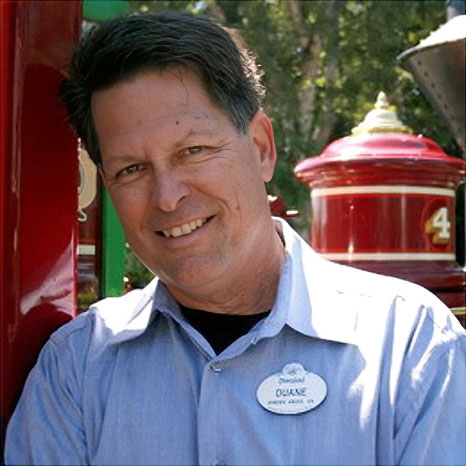
Duane Dike is the manager of creative production for a large entertainment company in Southern California. He has a doctorate in management and organizational leadership and an MBA in management. He is a popular guest speaker for education and management groups on subjects related to innovation, leadership, and thinking.

In his doctoral dissertation, he studied the relationships between manager behavior and organizational culture and how effective working environments are friendly, supportive, collaborative, and fun. With this background, Duane is a popular guest speaker for educational and management groups. He is a former adjunct professor at California Baptist University, in Riverside, California, and is a member of Social Psychology Network.

Taking time for leadership

Pondering issues before acting brings new alternatives, fresh perspectives and creative solutions. That why leaders who don't pause to reflect often run into trouble.

In praise of inconspicuous leadership

Many so-called leaders have an unhealthy interest in the outward trappings of their position. But real leadership is inconspicuous - and it's about far more than status or measurable achievements.

Get out of the way!

Barriers to productivity are many and varied, but the vast majority of them are by-products of the destructive attitudes and behaviors of leaders.

Learning is a process, not a result

None of us learn to read, ride a bike or pack a suitcase in a day. So understanding that learning is a process, not an event is fundamental to creating learning cultures rather than environments based on rote or blind faith.

Thinking about the good things

Some days, things at work just don't pan out. But rather than letting this undermine your motivation, it's worth taking a little time to think about the things that do make your job worthwhile.

Compassion

Compassion is not typically revered in the corporate world. Bosses are simply supposed to get things done. But if they're not careful, they can become impersonal, non-compassionate and ultimately, non-human.

On culture

Cultures are complicated things: they tend to break down to innumerable sub-cultures like concentric rings. But that doesn’t stop us embracing simplistic cultural stereotypes, be they about nations or organizations.

I think, therefore I feel

How many of us have said, “I’ve been so busy today I haven’t even had time to think?” If you haven’t had time to think, you haven’t had time to lead. Leading without thinking is leading into disaster.

Why change? Why not?

Change often fails because it is based on a plan/do model. We plan, and then expect people to do. But that ignores the exploration, thinking, mistaking, learning, testing and struggling that needs to come in between.

Leaders, go away!

Too many bosses fail to understand that every individual thinks and works at different rates or that we all need to distinguish between important and not so important work to operate effectively.

Relaxing while flying

Each time I get in a plane, I sit back and relax, because there not much else to do. What I’m getting to here is we have to learn to relax - and also learn how to separate work from non-work.

The theory thing

Management theories are constantly changing because our business world is in a state of eternal flux. So if business leaders can’t change their ways of thinking, they risk being left behind by the march of history.

Intelligence?

What exactly is intelligence? Is it something measured by an IQ test? Or should we also consider more subtle traits like humor, the ability to figure things out or storytelling?

Old dogs, new ideas

It's no surprise that beginners learn quickly. But the idea that you can’t teach an old dog new tricks is terribly wrong. The age of that old dog does not determine his or her ability to learn.

Leadership, innovation and the future

Leaders are critical to innovative thinking. Great ideas don't emerge from companies whose leaders try to control and micromanage. Innovation only thrives in organizations whose members are free to think and express themselves.

Everyday leadership

Over the years, I’ve lost count of the number of leadership theories and styles that I’ve studied, practiced and discarded. What all this has taught me is that leadership is a complicated puzzle - and that the best solution is to keep things simple.

Latest book podcasts

More Podcasts

Steve Cockram: the Voice-Driven Leader

Steve Cockram, co-founder of Giant Worldwide, talks about his latest book, 'The Voice-Driven Leader' and explains how to create environments where every voice gets heard.

What is Relationship Currency?

Keynote speaker and transformational coach, Ravi Rajani, talks about his new book, "Relationship currency: five communication habits for limitless influence and business success".

Hone - how purposeful leaders defy drift

We dive into the new book from Deloitte's Geoff Tuff and Steven Goldbach, 'Hone - how purposeful leaders defy drift'.

Lesley Cooper on stress and pressure at work

In this episode we discuss wellbeing at work with Lesley Cooper, including the issues of fear-based cultures and psychological safety.

The theory thing

Management theories are constantly changing because our business world is in a state of eternal flux. So if business leaders can’t change their ways of thinking, they risk being left behind by the march of history.

Intelligence?

What exactly is intelligence? Is it something measured by an IQ test? Or should we also consider more subtle traits like humor, the ability to figure things out or storytelling?

Old dogs, new ideas

It's no surprise that beginners learn quickly. But the idea that you can’t teach an old dog new tricks is terribly wrong. The age of that old dog does not determine his or her ability to learn.

Leadership, innovation and the future

Leaders are critical to innovative thinking. Great ideas don't emerge from companies whose leaders try to control and micromanage. Innovation only thrives in organizations whose members are free to think and express themselves.

Everyday leadership

Over the years, I’ve lost count of the number of leadership theories and styles that I’ve studied, practiced and discarded. What all this has taught me is that leadership is a complicated puzzle - and that the best solution is to keep things simple.

A time for every season

In too many organizations, older workers get written off ‘village idiots’. But that’s a big mistake - after all these are the people who know its history, remember how things used to be and know what works and what doesn’t.

Should we judge?

Making assumptions about others is a risky business. We don’t know their lives. We don’t know their happiness or their loneliness. We don’t know how they confront their issues. So why not converse? Enjoy it while you can, then move on when the environment changes.

The right way to brag

When you’re a manager, bragging about others is good. But bragging about yourself is bad, especially when it involves taking the credit for things other people have done in order to get ahead.

Time for change

Change is the basis of renewal. So even altering the way we approach some mundane task or activity can make life better and help us to think differently. A little change can make our world that much better.

So what went wrong?

Even in the high inflation years of the early 1980s, jobs were relatively secure. Not any more. Now when things go wrong in a business, the axe almost always falls swiftly on the people who do the work, and very rarely on the executives who made bad decisions.

The accountability dilemma

It’s all very well being held responsible and accountable as a manager, but that can only work if you’re also able to make real and meaningful decisions. Yet all too often, that decision-making lives with other people.

Feelings vs reasoning

The older I get, the more I see that rather than ignoring people’s expressions of feeling, managers ought to welcome them as good for business and realize that results can improve when you listen and respond appropriately to them.

Learning to play together

Even though we shared the same experiences, I think very different from my brothers. But that didn’t stop us learning to play together. So why screw up the little time we have on this earth with prejudices, hatred, and mistrust?

Focus on the positives

Why do we feel the need to wallow in the negative? So many good things happen in our lives, but our work-world tends to drive toward the negative and the non-productive.

Truth, authenticity and leadership

‘Authentic leadership’ is one of those phrases that gets tossed around so much that its real meaning is in danger of getting lost. So let’s take a look at ‘authentic’ in the context of leadership, music and tourism.

Names without faces

'Recognition', in its most basic sense, means being able to put a name to a face. But in the business world, names without faces are all too common. And the larger a company grows, the more likely it is that bosses don’t know the names or faces of the people who do the work.

Latest book reviews

MORE BOOK REVIEWS

Lead Like Julius Caesar

Lead Like Julius Caesar

Paul Vanderbroeck

What can Julius Caesar's imperfect story - his spectacular failures as well as his success - tell us about contemporary leadership challenges?

Hone - How Purposeful Leaders Defy Drift

Hone - How Purposeful Leaders Defy Drift

Geoff Tuff and Steven Goldbach

In a business landscape obsessed with transformation and disruption, Hone offers a refreshingly counterintuitive approach to today's organisational challenges.

Work Happier: How to be Happy and Successful at Work

Work Happier: How to be Happy and Successful at Work

Mark Price

An expertly crafted guide that doesn't just theorise about workplace satisfaction but provides a clear roadmap to achieve it.